
ADVANTAGES OF LIGHTWEIGHT Q-BLOCKS
The re-purposing of buildings into student residences, apartments, entry level housing and hotels is on the increase, with more and more developers looking to re-use or re-purpose existing buildings in key urban locations. In addition, existing foundations often require significant investment to cater for the load of traditional brick and mortar walls and, although lightweight walls such as dry walling is popular in commercial developments, they lack the robustness when used in residential refurbishments.
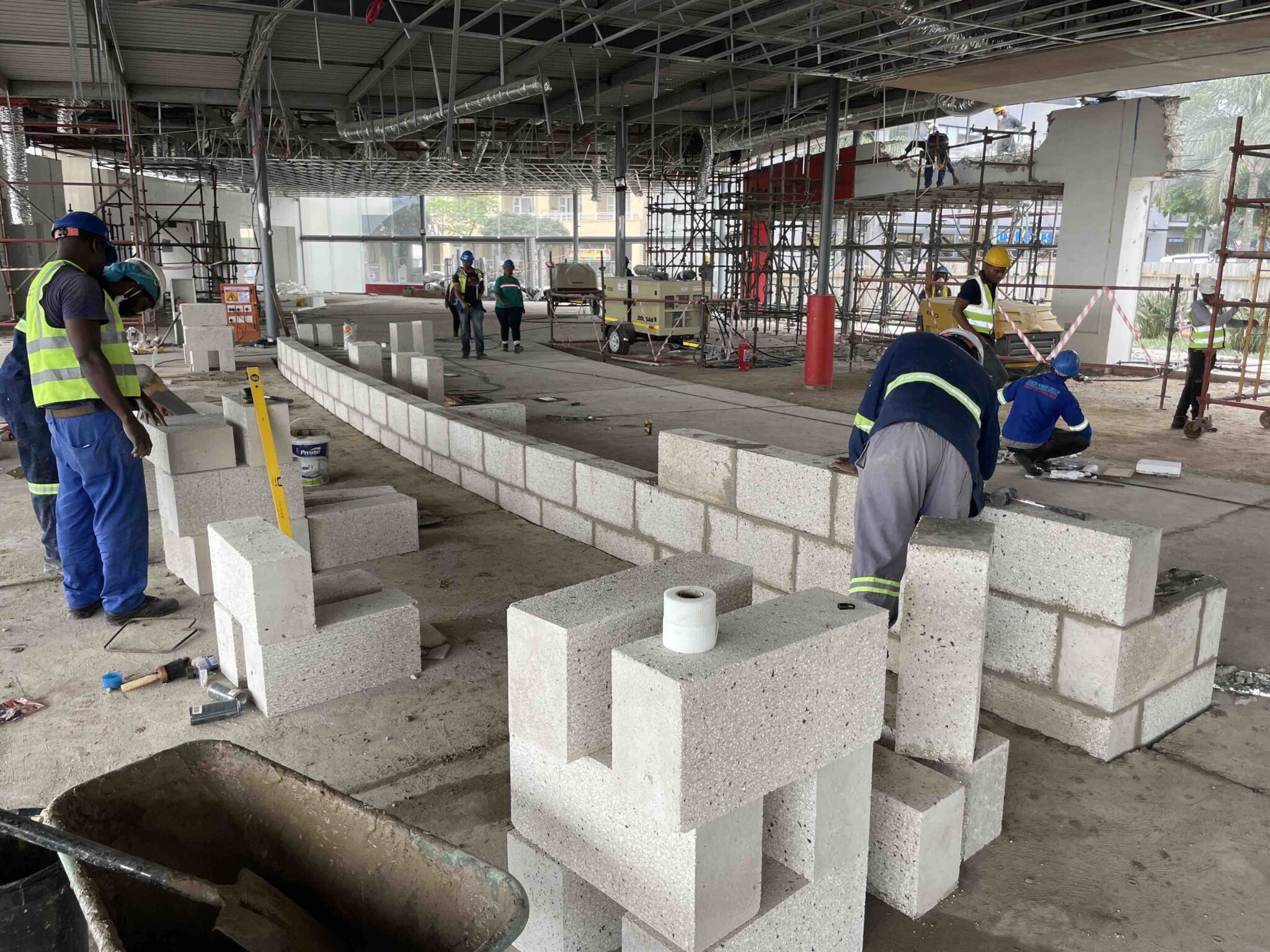
CemteQ’s Q-Blocks have densities as low as 25% of traditional bricks and blocks and are proving invaluable to the construction industry where clients and contractors require solid walling but also need to reduce loads on the structure. Construction is significantly quicker and easier with less labour resulting in reduced on-site costs.
CemteQ’s lightweight concrete blocks offer an eco-friendly, cost-effective walling alternative to traditional clay and concrete bricks and maxi bricks. Made with specially treated, re-engineered polystyrene beads as an aggregate replacement together with cement, perlite, micro-fibres and admixtures, these lightweight yet robust concrete blocks are then precision cut to size.
One of the primary advantages of polystyrene concrete blocks is their high thermal insulation value. With a thermal conductivity value of 0.1335 W/m·K, the 650kg/m3 blocks are highly energy-efficient and can significantly reduce heating and cooling costs for buildings. They are also durable, resistant to moisture and can withstand reasonable loads without cracking or breaking.
Another advantage of these polystyrene concrete blocks is their environmental sustainability. These blocks are made using recycled polystyrene which is a common waste material that would otherwise end up in landfills. They utilise 86% recycled components and have a carbon footprint 22% that of clay brick and 14% that of low strength conventional concrete. They also offer excellent insulating qualities with long-term savings in energy consumption over the lifecycle of buildings. By using this and other recycled materials including slag in the mix, construction projects can significantly reduce their environmental impact and contribute to a more sustainable future.
Polystyrene concrete blocks are solid, versatile, lightweight with excellent fire-resistance and can be used in a wide range of construction applications. They pass the “knock-test” and are available in a 100mm, 140mm and 200mm thicknesses, making them suitable for both residential and commercial construction projects. Chasing and fixings are generally simpler than conventional brick and mortar.
In addition to their energy efficiency and sustainability, polystyrene concrete blocks and panels are also easy to install and require little maintenance. They are a cost-effective building material that can significantly reduce construction time and costs while providing long-lasting and durable results.
Polystyrene concrete blocks are a lightweight and highly durable building material that has gained popularity in the construction industry in recent years. These blocks are made by combining polystyrene foam beads with cement, sand, and water to create a highly insulating and structurally sound material.
CemteQ’s lightweight concrete blocks offer an eco-friendly, cost-effective walling alternative to traditional clay and concrete bricks and maxi bricks. Made with specially treated, re-engineered polystyrene beads as an aggregate replacement together with cement, perlite, micro-fibres and admixtures, these lightweight yet robust concrete blocks are then precision cut to size.
One of the primary advantages of polystyrene concrete blocks is their high thermal insulation value. With a thermal conductivity value of 0.1335 W/m·K, the 650kg/m3 blocks are highly energy-efficient and can significantly reduce heating and cooling costs for buildings. They are also durable, resistant to moisture and can withstand reasonable loads without cracking or breaking.
Another advantage of these polystyrene concrete blocks is their environmental sustainability. These blocks are made using recycled polystyrene which is a common waste material that would otherwise end up in landfills. They utilise 86% recycled components and have a carbon footprint 22% that of clay brick and 14% that of low strength conventional concrete. They also offer excellent insulating qualities with long-term savings in energy consumption over the lifecycle of buildings. By using this and other recycled materials including slag in the mix, construction projects can significantly reduce their environmental impact and contribute to a more sustainable future.
Polystyrene concrete blocks are solid, versatile, lightweight with excellent fire-resistance and can be used in a wide range of construction applications. They pass the “knock-test” and are available in a 100mm, 140mm and 200mm thicknesses, making them suitable for both residential and commercial construction projects. Chasing and fixings are generally simpler than conventional brick and mortar.
In addition to their energy efficiency and sustainability, polystyrene concrete blocks and panels are also easy to install and require little maintenance. They are a cost-effective building material that can significantly reduce construction time and costs while providing long-lasting and durable results.