
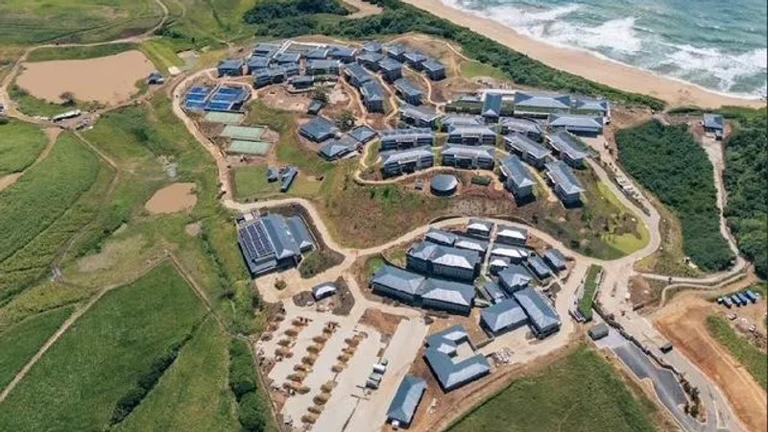
To understand why KwaZulu-Natal is poised to reclaim its seat at the global high table, spend an hour with Chris du Toit.
As the project lead of Tinley Leisure – the man tasked with delivering Club Med’s first-ever “Beach and Safari” resort – Du Toit isn’t just building a hotel. He is executing a direct challenge to the tired narrative that South Africa’s tourism future begins and ends in the Western Cape.
Since 2020, KZN has been battered by a “perfect storm” of riots, floods and municipal decay. In the boardroom, it was a region many were fleeing. But being a developer in South Africa requires a specific brand of vision, and a massive dose of resilience (Kwa-Silience as they call it in KZN), to bank on soil others have written off.
“In South Africa, there is no reason to panic, you find a way,” says Du Toit. “That’s the thing about South African businesses for me. We don’t go somewhere else for answers; we find them here. We work hard to make things happen.
“That’s been the secret at Club Med… we always find a way.”
The funding partners, African Bank, the IDC, and Collins Residential, had just the type of grit required to get a massive project like this off the ground when they signed off on it during the dark days of the 2022 floods.
By engaging local wards and traditional leadership early, the project even bypassed the “construction mafia” friction that has stalled so many other South African builds.
It was their vision of a “New Riviera” emerging from the once harshly rejected KZN that is only months away from coming to life with the official opening of the first-ever Club Med in South Africa.
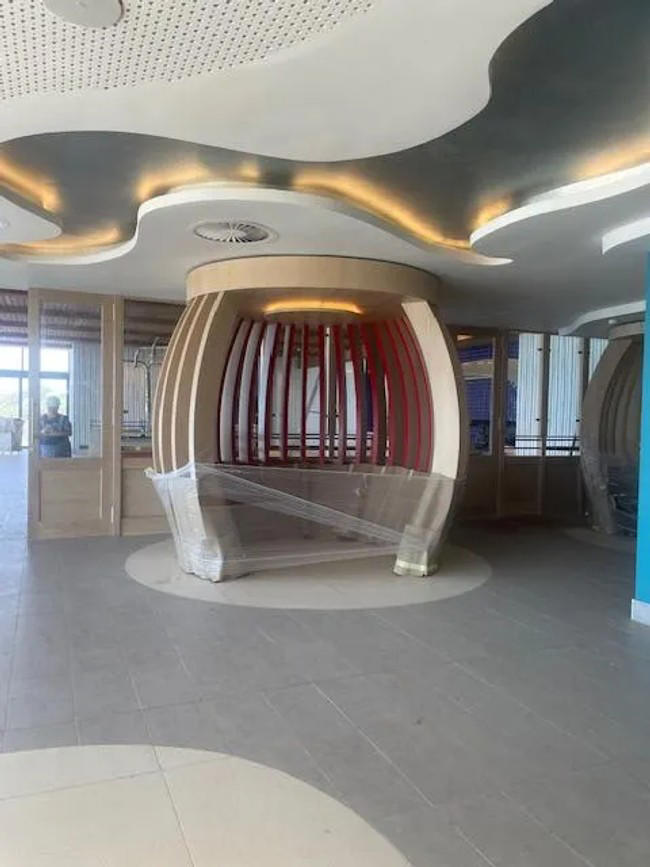
Unwrapping the whalebone pod that will be seating in the dining area.
This isn’t the faded KZN tourism of the 90s but instead eco-chic, high-end and international yet with the old nostalgia of warm seas and great hospitality. It is a shift in energy for a plagued region from “surviving” to “thriving”.
“Why not Cape Town?” is a question I got asked often when I said I was visiting the Club Med site in KZN.
It’s a clear metric of how far the province’s credibility had fallen. Floods, e-coli and corruption had tainted the promise, and Cape Town became the darling.
But on the ground, KZN is “banking” on a turnaround and in fact, from my experience there, I went from sceptic to fangirl. What I found was that moment when the swell is big enough for shrewd investors to hop on to catch the wave while others live to regret not taking the chance.
And this R2.1 billion project is the “anchor tenant” the province needed.
“Taking big risks means finding the positives when there are a hundred reasons not to,” Du Toit says. “The fact that interest rates are coming down and the economy is growing proves those early decisions were right. We needed a big project to change the narrative.”
This is not just one man’s optimism. Estienne de Klerk, a titan of the South African property sector and soon-to-be group CEO of GrowthPoint, has long championed the idea that tourism is the catalyst we’ve been waiting for.
Tourism KwaZulu-Natal (TKZN) agrees, with spokespeople famously calling the resort “the missing piece in the region’s tourism offerings”. For the province, this isn’t just a new building; it’s the completion of a global-standard circuit that has been decades in the making.
When I chatted to De Klerk recently while we were both in KZN, he reiterated how tourism is the ultimate economic multiplier, a sector that doesn’t just build buildings, but builds livelihoods.
As De Klerk puts it, tourism is “what we need” to bridge the gap between economic potential and actual growth, acting as a massive engine for job creation in a country that desperately needs it. “You don’t need a degree to work in tourism, herein lies our huge opportunity for employment.”
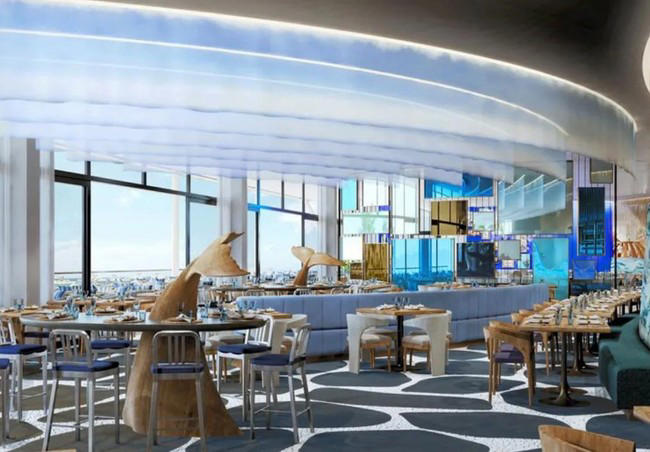
One of the dining areas.
History also shows that Club Med doesn’t just build resorts; they build economies. In 1976, when Cancun was a remote strip of sand, Club Med broke ground and triggered a multi-billion dollar boom that redefined Mexico. In Ibiza, they turned a hippy retreat into a global luxury capital. KZN is now undergoing that same transformation.
Beach meets bush
The real game-changer is a structural first in Club Med’s 70-year history: a resort where the beach literally unlocks the bush. By integrating the Mpilo Private Game Reserve (a 45-minute flight away), the project offers a duality the Mediterranean simply cannot match.
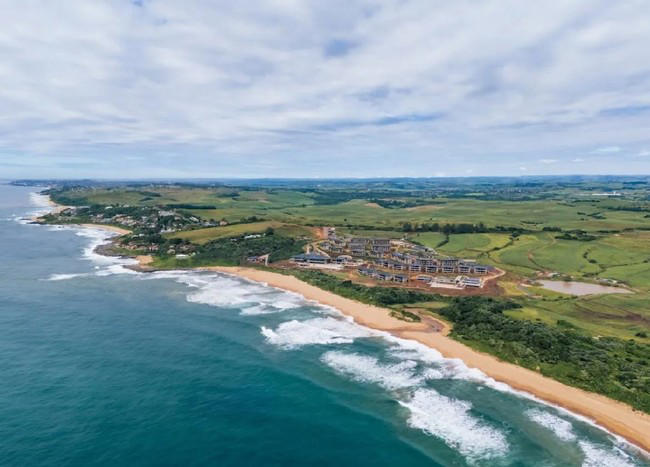
Built on some of the best beachfront in the world.
- The response: 77% of early guests have already booked the safari add-on.
- The yield: 345 hotel rooms and 66 boutique villa suites commanding R10,000 to R15,000 per night.
- The status: The first season is already almost fully subscribed.
“It’s simple. KZN is a ten-month-a-year destination; Cape Town is a summer destination,” Du Toit explains. “Our climate is resort-style year-long. We aren’t asking people for a reason to come here; we are giving the world a reason.”
Independent Newspapers has begun a campaign to highlight the amazing resilience of KwaZulu-Natal and chart its comeback.
Quantifying “Kwa-Silience”
And the resilience has big pay-offs.
- The multiplier: 1,750+ local labourers employed at peak.
- The safety: A 60% reduction in local crime due to high employment.
- The flywheel: For every traveller landing at King Shaka for Club Med, five other local businesses get a turn at the revenue.
For those who have lived the KZN business landscape, this feels like a hard-won victory.
Melanie Clarkson, marketing and communications manager for the Collins Residential sees it as a shift from “recovery” to “ascendancy.”
Pat Lambie, a key figure at Collins Residential and in the “Airport City” rollout, agrees: “The math of the Golden Corridor is undeniable. In a few months from now, King Shaka won’t just be a transit point, it will be the front door to a global Riviera. It’s our turn, and we are ready.”
Du Toit adds: “Cape Town has over 35 direct international flights a day, KZN only has three. The thing is there’s never been product in KZN… now there’s a Club Med resort and internationals want to come – we are woking on 60 to 70% international guests which means flights will have to increase.”
As the July 4, 2026, official opening nears, the message to global investors is loud and clear: If the world’s premier sun-and-beach brand is all-in on KZN, why aren’t you?
KZN is ready. As the final ropes are tied tight on the Tinley roof, the tide has officially turned.
KZN is open for business.